Neonatal Surgery in Namakkal
The first few days of a baby’s life are important for identifying health conditions that may require medical or surgical attention. Some newborns are born with congenital abnormalities affecting the digestive system, abdominal wall, urinary tract or other organs. Certain conditions may require surgery shortly after birth, while others can be assessed and managed through planned treatment.
If you are looking for neonatal surgery in Namakkal for your newborn, consulting a qualified paediatric surgeon can help you understand the condition, its severity and the available treatment options. Dr. P. Jayakumar (MBBS, MS, MCh), a surgeon specialising in Paediatric and General Surgery, provides consultation and surgical guidance for conditions affecting newborns and children at Jayacharan Clinic, Namakkal.
What Is Neonatal Surgery?
Neonatal surgery refers to surgical procedures performed on newborn babies, generally during the first 28 days after birth. These procedures address congenital abnormalities, birth-related conditions and certain medical problems that develop shortly after delivery.
Newborn babies have smaller organs, developing body systems and specific fluid, temperature and nutritional requirements. Therefore, surgical assessment and treatment require an understanding of neonatal anatomy and physiology.
Some conditions need immediate medical attention, while others can be managed with careful monitoring before surgery. The timing depends on the baby’s overall health, gestational age, weight and the nature of the condition.
Conditions That May Require Neonatal Surgery
Not every newborn health problem requires surgery. However, certain congenital conditions can affect normal feeding, digestion, breathing or the functioning of internal organs.
Some conditions that may require neonatal surgical evaluation include:
1. Oesophageal Atresia and Tracheoesophageal Fistula
Oesophageal atresia is a birth condition in which the food pipe does not develop as a continuous passage to the stomach. In some babies, an abnormal connection called a tracheoesophageal fistula may also be present.
Common signs include:
- Excessive drooling or saliva around the mouth
- Coughing or choking during feeding
- Difficulty swallowing
- Breathing difficulties
- Repeated episodes of aspiration
These conditions generally require prompt specialist assessment and surgical management.
2. Intestinal Atresia
Intestinal atresia occurs when a section of the intestine is narrowed or completely blocked due to abnormal development before birth. It can prevent food and digestive contents from passing normally through the intestine.
Possible symptoms include:
- Green-coloured vomiting (bilious vomiting)
- Abdominal swelling
- Difficulty passing stools
- Feeding intolerance
- Signs of dehydration
Depending on the location and severity of the blockage, surgery may be required to restore intestinal continuity.
3. Anorectal Malformations
Anorectal malformations are congenital conditions in which the anus or lower part of the rectum has not developed normally. Some babies may be born without a normally positioned anal opening, while others may have an abnormal connection between the rectum and nearby structures.
Early assessment is important to understand the type of abnormality and plan suitable treatment.
4. Congenital Diaphragmatic Hernia
A congenital diaphragmatic hernia occurs when there is an opening in the diaphragm, allowing abdominal organs to move into the chest cavity. This can affect lung development and breathing.
Newborns with this condition may experience significant respiratory difficulties and require specialised neonatal care. Surgical repair is generally considered after the baby’s breathing and circulation have been stabilised.
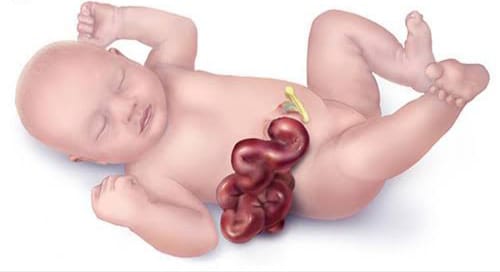
5. Gastroschisis and Omphalocele
These are congenital abdominal wall conditions in which some internal organs, particularly the intestines, are located outside the abdominal cavity.
- Gastroschisis: The intestines protrude through an opening in the abdominal wall, usually beside the umbilicus, without a protective covering.
- Omphalocele: Abdominal organs protrude through the umbilical area and are covered by a membrane.
Both conditions require prompt medical attention and an individualised treatment plan.
6. Congenital Intestinal Malrotation
Intestinal malrotation occurs when the intestine does not rotate or settle into its normal position during fetal development. In some newborns, this can lead to twisting of the intestine, known as volvulus.
Green-coloured vomiting can be an important warning sign. Intestinal volvulus is a surgical emergency because it can compromise the blood supply to the intestine.
7. Congenital Abdominal and Urinary Tract Conditions
Some newborns have abnormalities involving the kidneys, urinary tract or abdominal organs. Depending on the condition, these may require observation, further investigations or surgical correction.
Early evaluation helps determine whether intervention is necessary and when it should be performed.
Warning Signs in Newborn Babies That Need Medical Attention
Newborn babies cannot communicate discomfort, so parents and caregivers need to observe changes in feeding, bowel movements, breathing and general activity.
Some symptoms may indicate an underlying condition that requires urgent assessment.
Watch for the following warning signs:
- Green-coloured vomiting: May indicate intestinal obstruction or twisting of the intestine.
- Swollen abdomen: Persistent abdominal distension may be associated with digestive or intestinal problems.
- Difficulty passing stools: Delayed passage of the first stool or failure to pass stools may require investigation.
- Feeding difficulties: Repeated choking, coughing or inability to feed normally may indicate an underlying abnormality.
- Excessive drooling: In some newborns, this can be associated with an abnormality of the food pipe.
- Breathing difficulty: Rapid breathing, chest retractions or bluish discolouration require immediate medical attention.
- Abnormal appearance of the abdominal wall: Visible bowel or other organs outside the abdomen need urgent specialist assessment.
If your newborn has any of these symptoms, seek medical attention immediately. Do not wait for a routine appointment, particularly in cases of green vomiting, breathing difficulty or significant abdominal swelling.
Neonatal Surgical Care with Dr. P. Jayakumar in Namakkal
Dr. P. Jayakumar (MBBS, MS, MCh) specialises in Paediatric and General Surgery. He works as an Assistant Professor in the Department of Paediatric Surgery at Government Mohan Kumaramangalam Medical College Hospital.
His professional background includes paediatric surgical care, laparoscopic procedures and the management of surgical conditions affecting infants and children.
At Jayacharan Clinic, Namakkal, parents can consult Dr. Jayakumar to discuss concerns related to congenital abnormalities and surgical conditions in newborns. The consultation helps assess the baby’s condition, review relevant investigation reports and understand the need for further treatment or referral.
Parents looking for a neonatal surgeon in Namakkal can seek an evaluation to understand the available surgical options and the appropriate next steps for their newborn.
The clinic consultation and the location where a newborn’s surgery or intensive care is performed may differ. The required hospital facilities and neonatal support depend on the baby’s condition.
Why Is Early Evaluation Important in Neonatal Surgery?
Some neonatal surgical conditions can become serious if diagnosis and treatment are delayed. For example, intestinal volvulus can affect the blood supply to the bowel, while untreated intestinal obstruction can lead to complications.
Early evaluation can help:
- Identify structural abnormalities.
- Determine whether immediate intervention is needed.
- Plan appropriate investigations.
- Assess the baby’s overall health before surgery.
- Coordinate specialist and neonatal care.
- Plan follow-up after treatment.
The treatment timeline varies from one newborn to another. Not every congenital abnormality requires immediate surgery, and the decision should be based on clinical findings.
Frequently Asked Questions
1. What is neonatal surgery?
Neonatal surgery refers to surgical procedures performed on newborn babies, usually within the first 28 days of life. It is used to treat congenital abnormalities and certain conditions affecting the digestive system, abdominal wall, urinary tract and other organs.
2. What conditions require surgery in newborn babies?
Some conditions that may require neonatal surgery include intestinal atresia, oesophageal atresia, tracheoesophageal fistula, anorectal malformations, congenital diaphragmatic hernia, gastroschisis, omphalocele and intestinal malrotation.
3. Can congenital surgical conditions be detected before birth?
Yes. Some structural abnormalities can be identified during routine prenatal ultrasound scans or specialised fetal investigations. However, certain conditions may only become apparent after delivery.
4. Is surgery always necessary for congenital abnormalities?
No. Some congenital conditions require surgery, while others can be managed through observation, medication or planned intervention. The decision depends on the type of abnormality, its severity and the baby’s overall health.
5. Is neonatal surgery safe for newborn babies?
Neonatal surgery involves specific risks because newborns have developing organs and limited physiological reserves. The risks depend on the condition, the baby’s gestational age, weight and overall health. A specialist team evaluates these factors before recommending surgery.