
Hypospadias Treatment in Namakkal
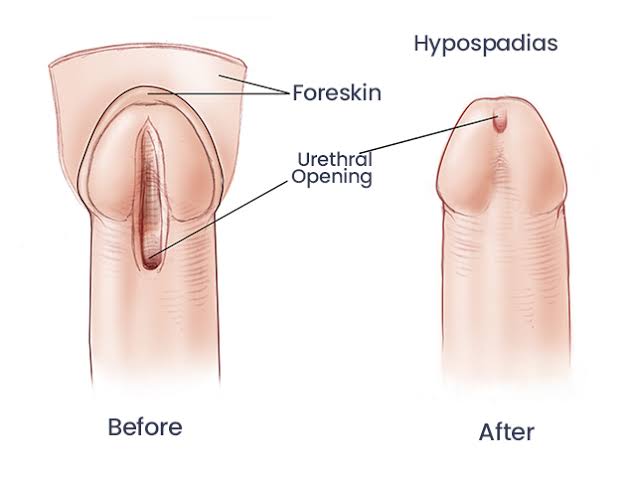
Hypospadias is a congenital condition in which the opening of the urethra (the tube that carries urine out of the body) is located on the underside of the penis instead of at its tip. It is present from birth and may be associated with a downward bend of the penis or an incompletely developed foreskin. The position of the opening and the severity of these associated changes vary from child to child.
Parents may notice hypospadias during a newborn examination or when they observe an unusual urinary opening or urine stream. Depending on the type of hypospadias, the condition may affect how a child passes urine and, in some cases, future sexual and reproductive function.
If you are looking for hypospadias treatment in Namakkal for your child, you can consult Dr. P. Jayakumar (MBBS, MS, MCh), a surgeon with a background in paediatric and general surgery, for an assessment of the condition and guidance on suitable treatment options.
The treatment plan depends on the location of the urethral opening, the presence of penile curvature, the child’s age and overall health. While some mild cases may be monitored, surgical correction is generally considered when the condition affects urinary function or penile anatomy.
What Is Hypospadias?
Hypospadias is a birth condition that affects the development of the penis and urethra in male babies. During normal development, the urethra forms a passage through which urine travels from the bladder and exits through an opening at the tip of the penis.
In children with hypospadias, this opening develops on the underside of the penis rather than at its usual position. It may be located just below the tip, along the penile shaft or closer to the scrotum.
The condition may also involve:
- Abnormal foreskin development: The foreskin may appear incomplete, with more skin covering the upper side than the underside of the penis.
- Penile curvature (chordee): The penis may bend downwards, particularly during an erection.
- Unusual urine stream: Urine may flow downwards or spray in different directions.
The severity of hypospadias depends on the position of the urethral opening and associated anatomical changes. A clinical examination helps determine the type of condition and whether treatment is needed.
What Are the Signs and Symptoms of Hypospadias?
Hypospadias is often identified during the physical examination of a newborn baby. In some children, parents may notice the condition later when they observe differences in the appearance of the penis or the direction of the urine stream.
Common signs and symptoms include:
- Urinary opening below the tip: The urethral opening is located on the underside of the penis instead of at the tip.
- Unusual foreskin appearance: The foreskin may not completely cover the underside of the penis, creating a hooded appearance.
- Downward penile curvature: The penis may have a noticeable downward bend.
- Abnormal urine direction: Urine may flow downwards, sideways or in a spraying pattern.
- Difficulty directing urine: Some children may find it difficult to pass urine while standing as they grow older.
Not every child with hypospadias experiences all these symptoms. Some children have a mild form with limited functional problems, while others may have more noticeable urinary or anatomical differences.
Parents who notice these signs should arrange an examination with a paediatric surgeon or paediatric urologist.
What Causes Hypospadias?
Hypospadias develops when the urethra and surrounding tissues do not complete their normal development during pregnancy.
The exact cause is not always known. However, genetic, hormonal and pregnancy-related factors may contribute to the development of this condition.
Some factors associated with an increased likelihood of hypospadias include:
- Family history: Children with a close family history of hypospadias may have a higher likelihood of developing the condition.
- Genetic factors: Certain genetic influences may affect the normal development of the male reproductive system.
- Hormonal influences: Changes in hormonal activity during pregnancy may affect urethral development.
- Maternal health conditions: Certain maternal health conditions, including diabetes, have been associated with an increased risk.
- Premature birth: Hypospadias is reported more frequently in babies born prematurely or with low birth weight.
Hypospadias is a congenital condition. It is not caused by poor hygiene, infections after birth or anything parents have done while caring for their baby.
What Are the Different Types of Hypospadias?
Hypospadias is classified according to the position of the urethral opening. This classification helps the surgeon understand the severity of the condition and plan suitable treatment.
1. Distal Hypospadias
In distal hypospadias, the urethral opening is located close to the tip of the penis. It may be found on the glans or near the area where the glans meets the penile shaft.
This is generally considered a less complex form of hypospadias. However, the need for treatment depends on the urinary stream, penile curvature and other anatomical findings.
2. Midshaft Hypospadias
In midshaft hypospadias, the urinary opening is located along the underside of the penile shaft.
Children with this type may have an abnormal urine stream and varying degrees of downward penile curvature. The surgical approach depends on the position of the opening and the condition of the surrounding tissues.
3. Proximal Hypospadias
In proximal hypospadias, the urethral opening is located closer to the base of the penis, sometimes near the junction between the penis and scrotum or within the scrotal region.
This form may be associated with more significant penile curvature and other genital developmental differences. A detailed examination is important to understand the condition and determine the appropriate treatment approach.
When Should Parents Consult a Paediatric Surgeon?
Parents should arrange a medical consultation if they notice an unusual position of the urinary opening or other signs of hypospadias in their child.
A clinical assessment is particularly important when:
- The urethral opening is not located at the tip of the penis.
- The penis appears to bend downwards.
- The foreskin looks incomplete or hooded.
- Urine flows downwards or sprays in different directions.
- The child has difficulty directing the urine stream.
- Hypospadias has been identified during a newborn examination.
If your child has been diagnosed with hypospadias, an early consultation can help you understand the type of condition, whether surgery is required and when treatment should be considered.
Important: Parents should avoid circumcision if hypospadias is suspected until the child has been examined by a paediatric surgeon or paediatric urologist. The foreskin may be required as tissue during surgical reconstruction.
How Is Hypospadias Diagnosed?
Hypospadias is usually diagnosed through a physical examination. The surgeon assesses the position of the urethral opening, the appearance of the penis and whether any associated abnormalities are present.
The assessment may include the following:
1. Examination of the Urethral Opening
The surgeon checks the location, shape and size of the urinary opening to identify the type of hypospadias.
2. Assessment of Penile Curvature
The presence and degree of downward curvature are evaluated because curvature may influence the surgical approach.
3. Examination of the Foreskin and Scrotum
The development of the foreskin, appearance of the scrotum and position of the testicles are assessed.
4. Evaluation of Associated Conditions
If hypospadias is severe or associated with undescended testicles or other genital differences, additional investigations and specialist evaluation may be recommended.
Most straightforward cases can be diagnosed through physical examination. Further tests are advised when the findings suggest associated conditions that require additional assessment.
What Are the Treatment Options for Hypospadias?
Treatment depends on the position of the urethral opening, the degree of penile curvature, urinary function and the child’s overall anatomy.
Not every child requires surgery. In selected mild cases, a specialist may recommend observation after assessing the potential functional and anatomical benefits of correction.
When treatment is required, hypospadias repair surgery is the main approach.
Hypospadias Repair Surgery
Hypospadias repair is a reconstructive surgical procedure intended to correct the position of the urethral opening and address associated penile curvature.
The main objectives of surgery are to:
- Create a urinary passage that opens at or near the tip of the penis.
- Correct significant downward penile curvature.
- Support a more functional urinary stream.
- Reconstruct the affected tissues to achieve appropriate penile anatomy.
The surgical technique is selected according to the type and severity of hypospadias. The condition of the surrounding tissues and the presence of previous surgical procedures may also influence the treatment plan.
Single-Stage Hypospadias Repair
In selected cases, hypospadias can be corrected through a single surgical procedure.
During the operation, the surgeon reconstructs the urinary passage and addresses penile curvature, if required. The suitability of this approach depends on the child’s anatomy and the complexity of the condition.
Two-Stage Hypospadias Repair
Some children with complex or proximal hypospadias may require a two-stage surgical approach.
The treatment generally involves:
- First stage: The affected tissues are prepared and reconstructed to create a suitable foundation for further repair.
- Second stage: After an appropriate healing period, the surgeon completes the reconstruction of the urinary passage.
The interval between procedures and the surgical technique depend on the child’s condition and tissue healing.
What Is the Right Age for Hypospadias Surgery?
The commonly recommended age for primary hypospadias repair is between 6 and 18 months.
Surgery during this period is generally preferred because the child is still young and has not reached later developmental stages. However, the exact timing should be decided after clinical assessment.
Factors that influence the timing include:
- The type and severity of hypospadias.
- The presence of penile curvature.
- The child’s general health and medical history.
- Associated congenital conditions.
- Whether the procedure is a primary repair or a repeat operation.
Children diagnosed at an older age can also be evaluated for surgical correction. Parents should discuss the appropriate timing with the treating surgeon rather than delaying consultation based on the child’s age.
What Should Parents Expect Before and After Hypospadias Surgery?
Understanding the surgical process and recovery can help parents prepare for their child’s treatment.
Before Surgery
The child undergoes a clinical assessment to determine the type of hypospadias and the appropriate surgical approach.
Parents may receive instructions regarding:
- Preoperative examination and necessary investigations.
- Fasting requirements before general anaesthesia.
- Medicines that need to be continued or temporarily adjusted.
- Hospital admission and postoperative care arrangements.
The surgeon should explain the proposed procedure, expected recovery, possible complications and follow-up requirements before obtaining parental consent.
After Surgery and Recovery
Recovery depends on the type of repair, the child’s age and individual healing.
A urinary catheter or stent may be placed temporarily to allow urine to drain while the reconstructed area heals. The duration of catheter use depends on the surgical technique and the treating surgeon’s instructions.
Postoperative care may include:
- Keeping the surgical area clean according to medical instructions.
- Giving prescribed medicines as advised.
- Following catheter and dressing care instructions.
- Attending scheduled follow-up appointments.
- Avoiding activities that may put pressure on the operated area during early healing.
Parents should contact the treating medical team if the child develops fever, increasing swelling, significant bleeding, worsening pain, reduced urine drainage or catheter blockage.
What Are the Possible Complications of Hypospadias Surgery?
Like other surgical procedures, hypospadias repair may involve certain complications. Their likelihood depends on the severity of the condition, the surgical technique and individual healing.
Possible complications include:
- Urethrocutaneous fistula: An abnormal opening develops between the reconstructed urinary passage and the skin, allowing urine to leak.
- Urethral stricture: Narrowing of the reconstructed urinary passage may affect urine flow.
- Meatal stenosis: The newly created urinary opening may become narrow.
- Wound healing problems: The surgical wound may take longer to heal or may separate.
- Residual penile curvature: Some downward curvature may remain or develop again after surgery.
- Need for additional surgery: Further correction may be necessary if a complication develops or the initial repair is incomplete.
Regular follow-up is important because certain complications may become noticeable only after the initial healing period.
Hypospadias Surgeon in Namakkal – Dr. P. Jayakumar
Dr. P. Jayakumar holds MBBS, MS and MCh qualifications and has a professional background in paediatric and general surgery. He is also an Assistant Professor in the Department of Paediatric Surgery at Government Mohan Kumaramangalam Medical College Hospital.
Parents seeking a hypospadias surgeon in Namakkal can consult Dr. Jayakumar to understand their child’s condition and discuss whether surgical correction is required.
An appropriate clinical assessment helps determine the location of the urethral opening, the presence of penile curvature and the need for further investigations or specialist evaluation.
At Jayacharan Clinic, parents can seek consultation regarding paediatric surgical conditions and receive guidance about the next steps in their child’s care.
Clinic: Jayacharan Clinic, Periyanna Gounder Plaza, Anna Nagar, Periyapatti, Poiyerikarai Street, Namakkal.
Contact: 7812810044
Frequently Asked Questions About Hypospadias
1. What is hypospadias in babies?
Hypospadias is a congenital condition in which the urinary opening is located on the underside of the penis instead of at the tip. It is usually identified during a newborn physical examination.
2. Is hypospadias a serious condition?
The severity varies depending on the position of the urethral opening and the presence of penile curvature. Mild cases may have limited functional effects, while more complex cases may require surgical correction.
3. Can hypospadias be treated without surgery?
Some mild cases may be managed without surgery after specialist assessment. However, when correction is needed, surgery is the main treatment option.
4. What is the right age for hypospadias surgery?
Primary hypospadias repair is commonly performed between 6 and 18 months of age. The exact timing depends on the child’s condition and medical assessment.
5. Is hypospadias surgery performed in one operation?
Some cases can be corrected through a single-stage procedure. More complex cases may require two-stage surgery depending on the anatomy and severity.