Stromal tumors occur in the testicular tissue where hormones are produced. Stromal tumor types include:
- Leydig cell tumors, which occur in cells that produce male sex hormones
- Sertoli cell tumors, which occur in cells that nourish germ cells

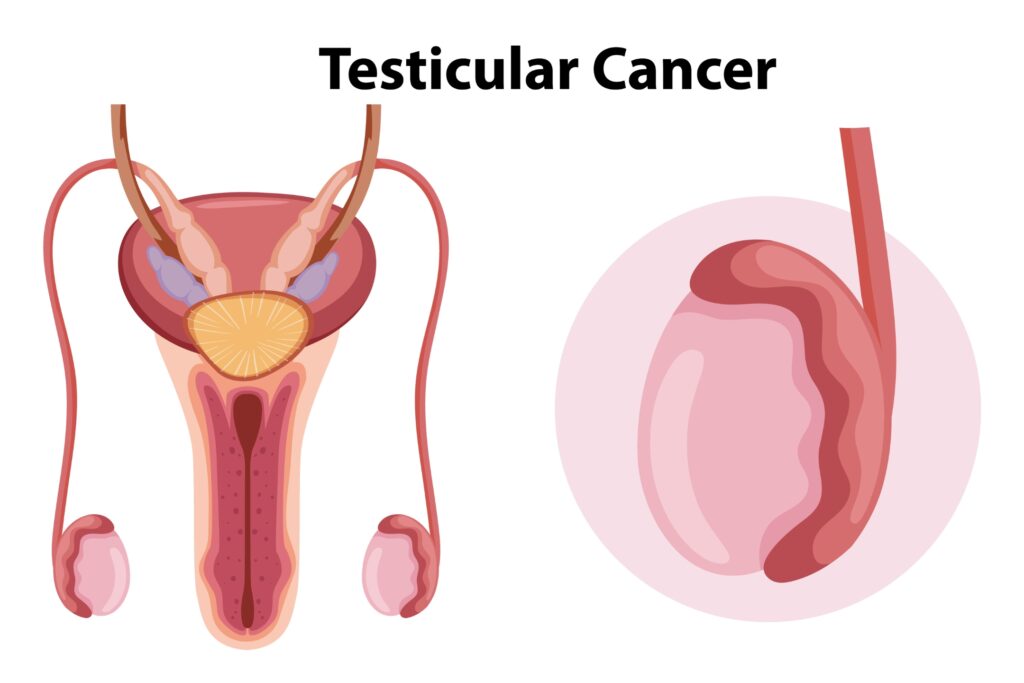

Not everyone with risk factors gets testicular cancer. However, if you have risk factors, it’s a good idea to discuss them with your doctor.
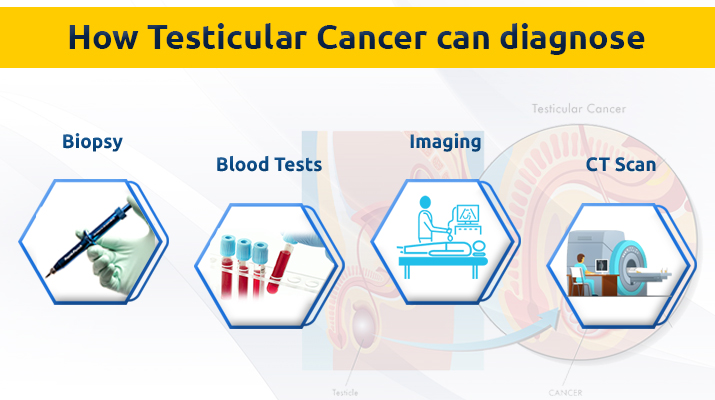
If you have testicular cancer, it is important to get an accurate diagnosis to help increase your chances for successful treatment. At Prolife cancer centre, our specialized experts use the most modern and accurate technology to diagnose testicular cancer and pinpoint the extent (stage) of the disease.
Other Testicular Cancer Diagnostic Tests
If you have symptoms that may signal testicular cancer, your doctor will perform a physical exam and ask you questions about your health, lifestyle, and family history.
One or more of the following tests may be used to find out if you have testicular cancer and if it has spread. These tests also may be used to find out if treatment is working.
Blood tests: Special blood tests that detect certain protein “markers” are used to diagnose and find out the extent of testicular cancer before and after orchiectomy. These tests include:
Alpha-fetoprotein (AFP): Elevated levels of this protein, which normally is produced by a fetus in the womb, may indicate the presence of a germ cell tumor in men.
Beta human chorionic gonadotropin (b-HCG): Increased levels of this protein, normally found in pregnant women, can indicate the presence of several types of cancer, including testicular cancer.
Lactate dehydrogenase (LDH): This enzyme is related to increased energy production by the body’s cells and tissues, which sometimes can indicate cancer.
Testicular Cancer Stages
Stage 0 (carcinoma in situ): Abnormal cells are found in the tiny tubules where sperm cells begin to develop.
Stage 1A: Cancer is in the testicle and epididymis (tube connecting ducts in rear of testicle to vas deferens) and may have spread to the inner layer of the membrane surrounding the testicle.
Stage 1B: In the testicle and epididymis and has spread to the blood or lymph vessels in the testicle Spread to the outer layer of the membrane surrounding the testicle.
Stage 1S: Cancer is found anywhere within the testicle, spermatic cord or the scrotum and either:
All tumor marker levels are slightly above normal
One or more tumor marker levels are moderately above normal or high
Stage 2A: Anywhere within the testicle, spermatic cord or scrotum, In up to five lymph nodes in the abdomen, none larger than 2 centimeters
Stage 2B: Cancer is anywhere within the testicle, spermatic cord or scrotum and has spread to either:
Up to five lymph nodes in the abdomen; at least one of the lymph nodes is larger than 2 centimeters, but none is larger than 5 centimeters
More than five lymph nodes that are not larger than 5 centimeters
Stage 2C:Is anywhere within the testicle, spermatic cord or scrotum and Has spread to a lymph node in the abdomen and the tumor is larger than 5 centimeters.
Stage 3A: Anywhere within the testicle, spermatic cord or scrotum, Spread to one or more lymph nodes in the abdomen, Spread to distant lymph nodes or to the lungs.
Stage 3B: Is anywhere within the testicle, spermatic cord or scrotum, May have spread to one or more nearby or distant lymph nodes or to the lungs.
Stage 3C: Is anywhere within the testicle, spermatic cord or scrotum, May have spread to one or more nearby or distant lymph nodes or to the lungs or anywhere else in the body
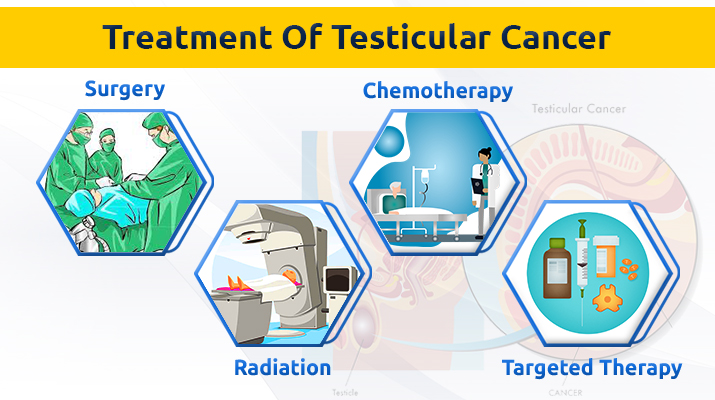
Treatment for testicular cancer at Prolife cancer centre focuses on the most modern techniques in surgery, chemotherapy and other therapies. We customize your treatment to include the most advanced procedures with the least impact on your body.
Our renowned team of experts considers all the options, and then choose the best course of action specifically for you.
Our Testicular Cancer Treatments
If you are diagnosed with testicular cancer, your doctor will discuss the best options to treat it. This depends on several factors, including the type and stage of the cancer and your general health.
One or more of the following therapies may be recommended to treat the cancer or help relieve symptoms.
Surgery
Orchiectomy: Surgery to remove the testicle. In most cases, orchiectomy is performed during testicular cancer diagnosis.
Retroperitoneal lymph node dissection (RPLND): For some patients, especially those with nonseminoma testicular cancer, surgery may also involve removal of lymph nodes in the abdominal area.
Reconstructive surgery: Men who are uncomfortable with their appearance after orchiectomy can have a prosthesis implanted in the scrotum that provides the look and feel of a real testicle.
Radiation Therapy
Seminomas, which are the form of testicular cancer found most often, are very sensitive to radiation treatment.
Radiation is performed after surgery to remove the testicle (orchiectomy). If the tumor was a seminoma, the oncologist may choose “watchful waiting” to see if the testicular cancer returns or use radiation to treat the lymph nodes along the spine, where the majority of recurrences are located.
Even if testicular cancer comes back, it is still treatable with radiation or chemotherapy. Radiation treatment has an average recurrence rate of about 5%. Radiation also can be used after chemotherapy if any cancer remains.
Chemotherapy
Chemotherapy is sometimes used in conjunction with surgical removal of the testicle to make sure all the cancer cells have been destroyed. For men with advanced tumors that have spread beyond the testicle or metastasized (spread) to distant areas of the body, chemotherapy is usually given for nine weeks or longer.

A prognosis is the Oncologist’s best estimate of how cancer will affect someone and how it will respond to treatment.
Prognosis and survival depend on many factors. Only a Oncologist familiar with your medical history, the type, stage and characteristics of your cancer, the treatments chosen and the response to treatment can put all of this information together with survival statistics to arrive at a prognosis.
A prognostic factor is an aspect of the cancer or a characteristic of the person that the oncologist will consider when making a prognosis.
A predictive factor influences how a cancer will respond to a certain treatment. Prognostic and predictive factors both play a part in deciding on a treatment plan and a prognosis.
Oncologist use different prognostic and predictive factors for newly diagnosed and recurrent breast cancers.
At Prolife Cancer Center, your Gallbladder cancer treatment is personalized to give the best results, while concentrating on your quality of life. We offer the best Testicular Cancer Treatment in Pune. A team of experts targets each patient’s testicular cancer, providing customized care to match your unique disease and circumstances. These highly focused physicians, as well as a specially trained support staff, personalize your care to ensure the most-advanced treatments with the least impact on your body.
As one of the nation’s most active cancer centers, Prolife cancer sees many more patients with testicular cancer than does the average oncologist. This translates to an extraordinary level of expertise, which can mean higher chances for successful treatment.
And at Prolife you’re surrounded by the strength of one of the nation’s largest and most experienced comprehensive cancer centers, which has all the support and wellness services needed to treat the whole person – not just the disease.