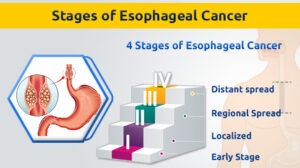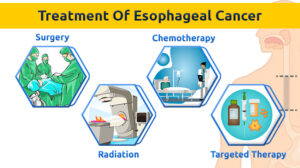
Surgeons can treat Esophageal Cancer with surgery, radiation, chemotherapy, and drugs. The treatment you get will depend on:
- Which type of tumor you have and how many there are
- Whether it’s harmful
- If it has expanded to different sections of your body
Surgery to remove very small tumors. If your tumor is very small, limited to the surface layers of your esophagus and hasn’t grown, your doctor may recommend removing cancer and the edge of normal tissue that surrounds it. Surgery can be done using an endoscope passed under your esophagus and into your esophagus.
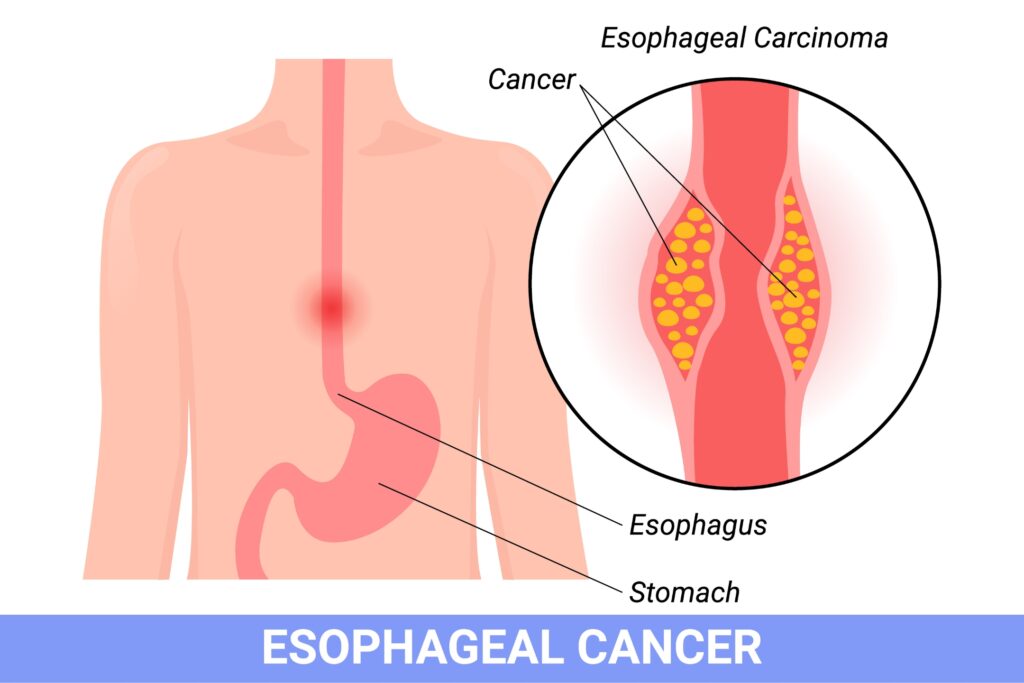
Surgery to remove a part of the esophagus. While an esophagectomy, your surgeon extracts the section of your esophagus that includes the tumor, along with a part of the top part of your stomach, and nearby lymph nodes. The remaining esophagus is reconnected to your stomach. Normally, this is achieved by picking the stomach up to reach the remaining esophagus.
Surgery to withdraw part of your esophagus and the upper part of your abdomen. During esophagogastrectomy, your doctor extracts the portion of your esophagus, nearby lymph nodes and a greater part of your stomach. The remainder of your abdomen is then pulled up and reattached to your esophagus. If important, part of your colon is used to help connect the 2.
Radiation
This method uses high-energy X-rays to destroy tumor cells. You might get this procedure if your tumor has grown or if it’s in a place that doctors can’t reach with surgery.
Most of the time, you’ll get this procedure from a machine outside your body. In some cases, your surgeon can put radiation implants near tumors inside your body.
Chemotherapy
It uses drugs to remove cancer cells or to prevent them from growing. You take them by mouth, or a surgeon injects them into one of your veins.
Drugs are typically used before or later surgery in people with esophageal cancer. Chemotherapy can also be mixed with radiation therapy. In people with difficult cancer that has grown beyond the esophagus, chemotherapy may be used alone to help relieve signs and symptoms produced by cancer.
Targeted therapy
It uses drugs that hit certain genes on tumor cells to destroy cancer. This treatment limits damage to the healthy cells in your body, which can occur with radiation or chemotherapy.
Your surgeon will decide which drug is best for you by examining cells from your tumor first.
Specialized Esophageal Cancer Treatments
With Laparoscopic surgery, Prolife offers unique options. Our globally renowned team of physicians shows your treatment for the most benefit while reducing the impact on your body.
Dr. Sumit Shah is expertise in treating esophageal Cancer that has spread to other sections of the body. We offer Laparoscopic surgery program & as well as chemotherapy and targeted therapy options.