If your doctor suspects cholangiocarcinoma, he or she may have you undergo one or more of the following tests:
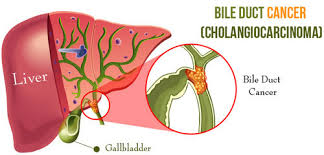
Bile Duct Cancer (cholengiocarcinoma) Cancer
Cholangiocarcinoma is cancer that forms in the slender tubes (bile ducts) that carry the digestive fluid bile. Bile ducts connect your liver to your gallbladder and to your small intestine. This condition, also known as bile duct cancer, is an uncommon form of cancer that occurs mostly in people older than age 50, though it can occur at any age.
Doctors divide cholangiocarcinoma into different types based on where the cancer occurs in the bile ducts:
- Intrahepatic cholangiocarcinoma occurs in the parts of the bile ducts within the liver and is sometimes classified as a type of liver cancer.
- Hilar cholangiocarcinomaoccurs in the bile ducts just outside of the liver. This type is also called perihilar cholangiocarcinoma.
- Distal cholangiocarcinomaoccurs in the portion of the bile duct nearest the small intestine.
What Are the Symptoms of Bile Duct Cancer (cholengiocarcinoma) ?
- Yellowing of your skin and the whites of your eyes (jaundice)
- Intensely itchy skin
- White-colored stools
- Fatigue
- Abdominal pain
- Unintended weight loss
Causes
Doctors know that gallbladder cancer forms when healthy gallbladder cells develop changes (mutations) in their DNA. These mutations cause cells to grow out of control and to continue living when other cells would normally die. The accumulating cells form a tumor that can grow beyond the gallbladder and spread to other areas of the body.
Most gallbladder cancer begins in the glandular cells that line the inner surface of the gallbladder. Gallbladder cancer that begins in this type of cell is called adenocarcinoma. This term refers to the way the cancer cells appear when examined under a microscope.
Treatment
- Surgery
- Liver transplant.
- Chemotherapy
- Radiation therapy
- Photodynamic therapy
- Biliary drainage
Diagnosis
- Liver function tests.Blood tests to measure your liver function can give your doctor clues about what’s causing your signs and symptoms.
- Tumor marker test.Checking the level of cancer antigen (CA) 19-9 in your blood may give your doctor additional clues about your diagnosis. CA 19-9 is a protein that’s overproduced by bile duct cancer cells.
- Imaging tests. Imaging tests can help your doctor see any abnormalities in your internal organs that may indicate cholangiocarcinoma. Techniques used to diagnose bile duct cancer include computerized tomography (CT) scans and magnetic resonance imaging (MRI) combined with magnetic resonance cholangiopancreatography (MRCP). MRCP is increasingly being used as a noninvasive alternative to ERCP. It offers 3-D images without the need for a dye to enhance the images.
- Head and Neck Cancer
- Larynx (voice box) Cancer
- Oral (Mouth) Cancer
- Throat Cancer
- Salivary Glands Cancer
- Thyroid Cancer
- Breast Cancer
- Thoracic Cancer
- Endocrine Cancer
- Anal Canal Cancer
- Bile Duct Cancer
- Bladder Cancer
- Cervical Cancer
- Colorectal Cancer
- Esophageal Cancer
- Extremity(limb) Sarcoma
- Gall Bladder Cancer
- Gastrointestinal Cancer
- Gynecologic Cancer
- Hepato Pancreatico Billiary Cancer
- Kidney Cancer
- Ovarian cancer
- Pancreatic Cancer
- Penile Cancer
- Retroperitoneal Sarcoma
- Vulvar and Vaginal Cancer
- Stomach Cancer
- Testicular Cancer
- Urologic Cancer
- Uterine Cancer
- Laparoscopic Cancer Surgery
- Robotic cancer surgery
Dr. Sumit Shah – Cancer Specialist in Pune
Dr. Sumit Shah, a renowned Chief Consultant, Surgical Oncologist, and Robotic surgeon, is the founder of Prolife Cancer Centre & Research Institute. This state-of-the-art medical facility provides a comprehensive range of integrated cancer treatment options under one roof. Dr. Shah has pursued a super-specialty course in Surgical Oncology at the Cancer Centre Welfare Home and Res. Institute in Kolkata, where he was recognized as the Best Outgoing Cancer Surgeon. He is among the few cancer specialist in Pune who possess this recognized degree, demonstrating his exceptional expertise in the field of surgical oncology.

Faq's
What are the early warning signs of head and neck cancer?
Early signs vary by location but may include a persistent sore or swelling in the mouth, unexplained hoarseness or voice change, difficulty swallowing, a lump in the neck, frequent nosebleeds, red or white patches in the mouth, or a sore throat that does not heal. If any of these symptoms last more than two weeks, consult a specialist promptly.
Is head and neck cancer curable?
Yes, head and neck cancer detected at early stages (Stage 0, I, or II) is often highly curable with surgery and/or radiation therapy. Even Stage III and IVa/IVb cancers can be effectively treated with a combination approach. The key to better outcomes is early diagnosis and treatment at a specialized cancer centre like Prolife Cancer Centre in Pune.
How is head and neck cancer diagnosed?
Diagnosis at Prolife Cancer Centre involves a combination of physical examination, nasendoscopy, laryngoscopy, biopsy (tissue sampling), lymph node testing, blood tests, and imaging such as X-rays or CT/MRI scans. The appropriate tests depend on the location and nature of your symptoms.
Who is the best head and neck cancer surgeon in Pune?
Dr. Sumit Shah is a leading head and neck cancer surgeon in Pune and the founder of Prolife Cancer Centre & Research Institute. He holds a super-specialty degree in Surgical Oncology and was recognized as the Best Outgoing Cancer Surgeon during his training at the Cancer Centre Welfare Home and Research Institute, Kolkata. He is among the very few surgeons in Pune with this recognized qualification.
Where can I find the best treatment for head and neck cancer in Pune?
The Prolife Cancer Centre & Research Institute, located at Gultekadi, Market Yard, Pune is widely recognized as a premier destination for head and neck cancer treatment in Pune. Founded by Dr. Sumit Shah, a leading surgical oncologist and robotic surgeon, the center provides comprehensive, end-to-end oncology care under one roof. Prolife integrates advanced treatments like robotic cancer surgery and laparoscopic options with supportive care, including highly specialized speech therapists and pathologists for post-treatment rehabilitation.
Google Review
EXCELLENTTrustindex verifies that the original source of the review is Google. The staff here was truly very cooperative and calm. Also the surgeon was quite a lot friendly and the patient was comfortable with the surgeonPosted on GoogleTrustindex verifies that the original source of the review is Google. Visited Dr Sumit sir, for Chemotherapy. It was the best experience and staff was very cooperative. Dr Sumit sir concern for patient and his calm advice is worth appreciated. I belive Dr has treated and God has cured us. Also we never felt it was a hospital it felt like it was a second home to us. I can rate 5 out of 5 on likert scale. Highly recommended.Posted on GoogleTrustindex verifies that the original source of the review is Google. Dr Sumit is Best Mouth Cancer surgeon in Pune. Must visit for consultationPosted on GoogleTrustindex verifies that the original source of the review is Google. Had a really good experience here. The doctor was very kind, patient, and explained everything properly. The staff was also supportive and professional. Overall treatment and care were excellent. Highly recommended !