
The endocrine system is a network of glands that create hormones and pass them in the body through the blood. There are various glands in the system, including the:


Signs depend on where the cancer is spreading in the body. A thyroid tumor may cause swelling in the neck, in the region of the thyroid. The following symptoms may be warning signs:
- Headaches
- Unusual weight changes
- Unusual anxiety
- Heart palpitations or elevated blood pressure
- Unusual hair growth
- Disproportionate acne
- Diminished sex drive
- Muscle weakness
- Easy bleeding
These signs usually do not mean you have Endocrine cancer. But if you see one or more of them for more than two weeks, consult your doctor.
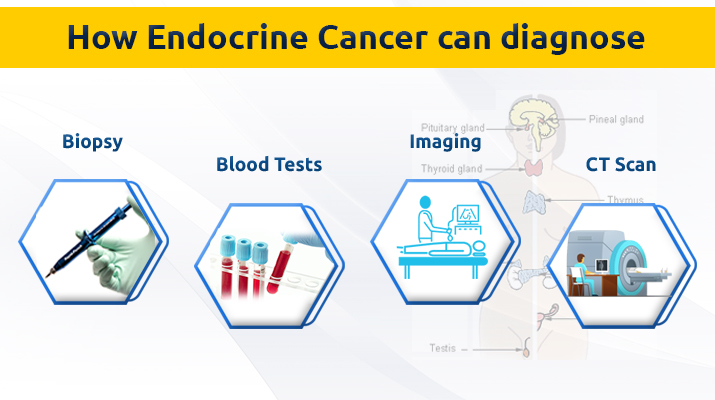
If your doctor finds something different in screening or you have any of the signs of Endocrine cancer, further tests will be required to diagnose the condition.
- Biopsy: This is the most reliable diagnostic technique. Doctors analyze tissue samples for evidence of cancer.
- Blood and Urine Tests: The levels of hormones produced under certain conditions are present in blood and urine and are symbolic of possible tumors.
- Imaging: With either a CT scan or MRI, your surgeon can verify the presence of an adrenal tumor, as well as determine its correct size and position.
- Metaiodobenzylguanidine scan (MIBG): This is a unique test conducted for 2 days. It is designed to show endocrine tumors that are not visible in other scans. On the 1st day, a patient gets an injection followed by a scan with a specific camera. The next day, the scan is repeated.
| Stage | Stage grouping | Stage description* |
| I | T1 N0 M0 | The tumor is less than 2 cm over and is still just in the pancreas (T1). Cancer has not developed to nearby lymph nodes (N0) or different portions of the body. |
| II | T2 N0 M0 | The tumor is at least 2 cm across but no longer than 4 cm over, and it is still just in the pancreas (T2). Cancer has not developed to nearby lymph nodes (N0) or different portions of the body (M0). |
| OR | ||
| T3 N0 M0 | The tumor is more than 4 cm across and is still just in the pancreas, OR the tumor has grown into the duodenum or the general bile duct (T3). Cancer has not developed to nearby lymph nodes (N0) or different portions of the body (M0). | |
| III | T4 N0 M0 | The tumor has spread into nearby organs (such as the stomach, spleen, colon, or adrenal gland) or it has spread into nearby large blood arteries (T4). Cancer has not developed to nearby lymph nodes (N0) or different portions of the body (M0). |
| OR | ||
| Any T N1 M0 | The tumor can be any area and might or might not have developed outside of the pancreas (any T). It has grown to nearby lymph nodes (N1), but not to different portions of the body (M0). | |
| IV | Any T Any N M1 | The tumor can be any size and might or might not have spread outside of the pancreas (any T). It might or might not have developed to nearby lymph nodes (any N). The cancer has grown in different parts of the body (M1). |
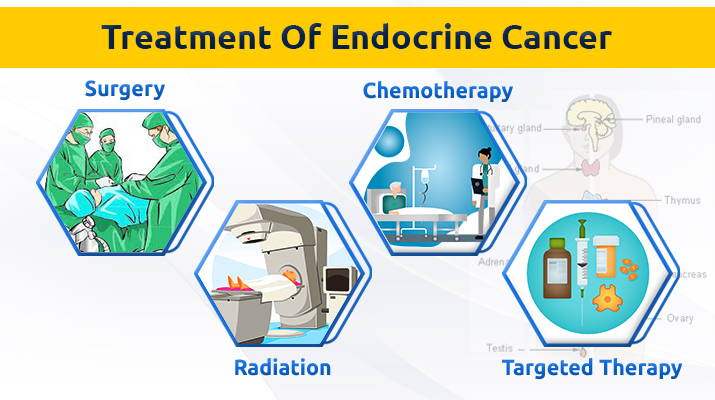
Surgeons can treat Endocrine Cancer with surgery, radiation, chemotherapy, and drugs. The treatment you get will depend on:
- Which type of tumor you have and how many there are
- Whether it’s harmful
- If it has expanded to different sections of your body
Surgery
It’s one of the most popular treatments for many tumors. It can totally remove tumors, especially those that aren’t cancer and haven’t grown.
A doctor might be capable to take out only the tumor. Or he may remove portions or all of the organs that has a Tumor, like a pancreas, stomach, or liver.
Doctors can also use other kinds of surgery for people who can’t have a regular operation or who have many, small tumors.
In 1 type, called radiofrequency ablation, your surgeon will insert a probe into the tumor that gives off full-energy radio waves, which kills cancer cells in a particular area. Another type, called cryosurgery, gives an extreme cold quickly to a tumor with a tiny, round tube. For these operations, your surgeon might use MRI scans or ultrasounds to manage where the probe should continue.
Radiation
This method uses high-energy X-rays to destroy tumor cells. You might get this procedure if your tumor has grown or if it’s in a place that doctors can’t reach with surgery.
Most of the time, you’ll get this procedure from a machine outside your body. In some cases, your surgeon can put radiation implants near tumors inside your body.
Chemotherapy
It uses drugs to remove cancer cells or to prevent them from growing. You take them by mouth, or a surgeon injects them into one of your veins. You might take a particular medicine or a mix of different ones for some weeks. They can produce side effects — such as fatigue, nausea, vomiting, and hair loss — but they stop after your treatment is over. Your surgeon can tell you what you can do to feel better during treatment.
Targeted therapy
It uses drugs that hit certain genes on tumor cells to destroy cancer. This treatment limits damage to the healthy cells in your body, which can occur with radiation or chemotherapy.
Your surgeon will decide which drug is best for you by examining cells from your tumor first.
Healing from Surgery
Most people who have colon cancer surgery heal without any problems. These people go home within 2-to-4 days. A fewer number of patients may have a slower recovery and need to wait for a little more.
A surgeon will give you guidance on how to take care of yourself, including your surgery, bathing, driving, and sexual activity. There will be information about yourself:
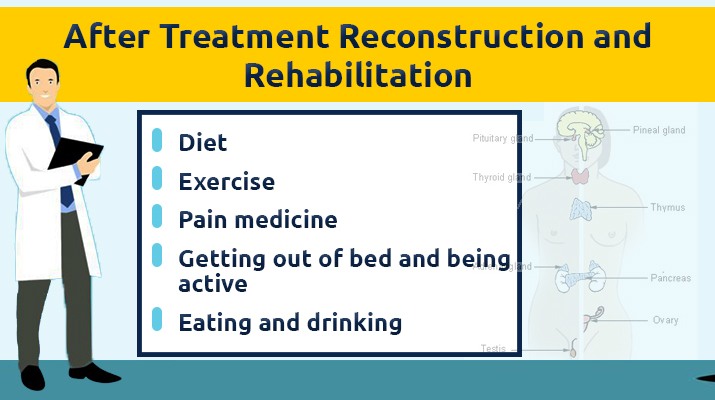
- Diet
- Exercise
- Pain medicine
After Treatment, you will be given a Daily Goals Checklist. Use that checklist to understand how you are doing every day.
Your Daily Goals Checklist
While you are in the hospital, you will have regular aims to help you recover. These aims include:
- Getting out of bed and being active
- Eating and drinking
- Controlling your pain

After you’ve completed your treatments for Endocrinel cancer, follow-up care is very essential. Routine checkups can help find any changes in your health, and if cancer comes back (or “recurs”), it can be treated as soon as possible.
If your treatment has finished, follow-up appointments maybe every 3−6 months for the first couple of years and 6−12 months for the following 3 years.
Your doctor may check your CEA level before you begin treatment and again after treatment to understand if it has come down.
Doctors recommend CT scans of the chest, abdomen, and pelvis n a daily schedule for 3 years in people who are at high risk for recurrence.
At Prolife Cancer Center, your Endocrine cancer treatment is personalized to give the best results, while concentrating on your quality of life. We offer minimally invasive laparoscopic surgeries that provide successful treatment with less impact on you.
Specialized Endocrine Cancer Treatments
If laparoscopic surgery is needed to treat Endocrine Cancer, Prolife offers unique options. Our globally renowned team of physicians shows your treatment for the most benefit while reducing the impact on your body.
Dr. Sumit Shah is expertise in treating Endocrine cancer. We offer laparoscopic surgery program, as well as chemotherapy and targeted therapy options.